
Randomized Feasibility Trial of Routine Versus Selective Transesophageal Echocardiography During Isolated Coronary Artery Bypass Grafting
JACC: Advances | 2026
Randomization to routine versus selective TEE during isolated CABG was feasible, with 98% protocol adherence, supporting advancement to a definitive multicenter trial.

Proof-of-Concept Automated Framework for Intraoperative Transesophageal Echocardiography: View Classification and Biventricular Function Assessment
Journal of Cardiothoracic and Vascular Anesthesia | 2026
Developed a deep learning framework to automatically classify intraoperative TEE views and assess biventricular function and tricuspid regurgitation.

Practice Pattern Variability in the Use of Pulmonary Arterial Catheters in Cardiac Surgery
Journal of Cardiothoracic and Vascular Anesthesia | 2025
Pulmonary artery catheter use varied dramatically across 53 U.S. cardiac surgical centers, with hospital practice pattern emerging as the strongest predictor of whether a patient received invasive monitoring.
Surgical Volume and Outcomes of Intraoperative Transesophageal Echocardiography in Coronary Artery Bypass Grafting
JAMA Network Open | 2025
In more than 1.26 million patients undergoing isolated CABG, intraoperative TEE was associated with improved survival at low- and medium-volume hospitals, particularly among patients with complex coronary disease or hemodynamic instability, but not at high-volume hospitals. These findings support a more individualized approach to TEE use and provide a rationale for randomized evaluation.

Automated Structured Data Extraction From Intraoperative Echocardiography Reports Using Large Language Models
British Journal of Anaesthesia | 2025
A consensus-based ensemble of open-source large language models accurately converted unstructured intraoperative TEE reports into structured echocardiographic data, with the most stringent voting strategy reaching 99.4% presurgical consensus accuracy while reducing hallucination-related errors.
Testing Clinical Selection Criteria for Intraoperative Transoesophageal Echocardiography in Isolated Coronary Artery Bypass Graft Surgery
BJA Open | 2024
In matched analyses of more than 42,000 patients undergoing isolated CABG, intraoperative TEE was associated with improved 30-day survival in patients with heart failure, particularly those undergoing multivessel CABG, but not in lower-risk subgroups.
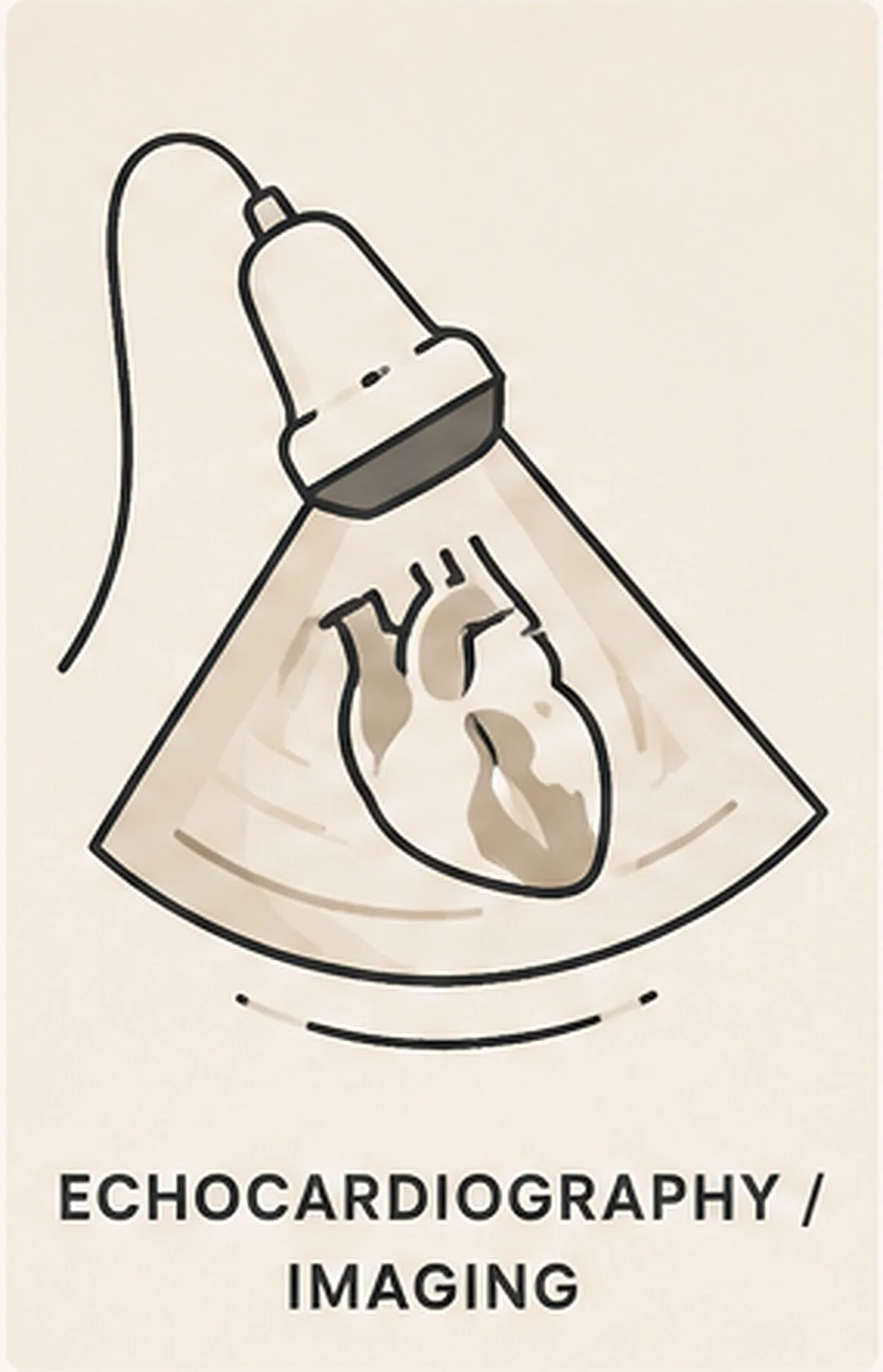
Pragmatic Evaluation of a Deep-Learning Algorithm to Automate Ejection Fraction on Hand-Held, Point-of-Care Echocardiography in a Cardiac Surgical Operating Room
Journal of Cardiothoracic and Vascular Anesthesia | 2024
A fully automated deep-learning algorithm estimated ejection fraction accurately when point-of-care images were adequate, but performance deteriorated substantially with poor image quality; highlighting the need for safeguards in perioperative AI applications.

Predictors of Intraoperative Echocardiography: Analysis of The Society of Thoracic Surgeons Database
The Annals of Thoracic Surgery | 2023
Across nearly 2 million cardiac surgical patients, the hospital and individual surgeon were far stronger predictors of intraoperative TEE use than patient characteristics, operative risk, surgical volume, or geography.

Impact of Hospital Practice and Staffing Differences on Transesophageal Echocardiography Use in Cardiac Valve or Coronary Artery Bypass Graft Surgery
Journal of Cardiothoracic and Vascular Anesthesia | 2022
Among more than 260,000 Medicare beneficiaries, hospital practice was the strongest predictor of intraoperative TEE use, and differences in TEE staffing explained a substantial share of variation — particularly in isolated CABG, where anesthesiologist staffing was strongly associated with TEE use.
Association of Intraoperative Transesophageal Echocardiography and Clinical Outcomes After Open Cardiac Valve or Proximal Aortic Surgery
JAMA Network Open | 2022
In a national cohort of more than 870,000 patients, intraoperative TEE was associated with lower 30-day mortality, stroke or mortality, and reoperation or mortality after open valve or proximal aortic surgery.

Validation of Claims Data for the Identification of Intraoperative Transesophageal Echocardiography During Cardiac Surgery
Journal of Cardiothoracic and Vascular Anesthesia | 2021
Validated procedural claims as a high-fidelity method for identifying intraoperative TEE, with 99.9% sensitivity and 100% specificity compared with manual medical record review.

Application of Machine Learning Approaches to Administrative Claims Data to Predict Clinical Outcomes in Medical and Surgical Patient Populations
PLOS ONE | 2021
Developed and independently validated a claims-based machine learning model that predicted 30-day mortality and a broad range of adverse events across medical and surgical inpatients, with strong discrimination and calibration.
Association Between Transesophageal Echocardiography and Clinical Outcomes After Coronary Artery Bypass Graft Surgery
Journal of the American Society of Echocardiography | 2021
Using instrumental-variable methods in more than 114,000 Medicare beneficiaries undergoing isolated CABG, TEE was associated with lower 30-day mortality and lower stroke-or-mortality, without increased esophageal perforation.
Transesophageal Echocardiography, Mortality, and Length of Hospitalization after Cardiac Valve Surgery
Journal of the American Society of Echocardiography | 2020
Among more than 219,000 Medicare beneficiaries undergoing open valve surgery, perioperative TEE was associated with lower adjusted 30-day mortality without increasing length of hospitalization.
Transesophageal Echocardiography, Acute Kidney Injury, and Length of Hospitalization Among Adults Undergoing Coronary Artery Bypass Graft Surgery
Journal of Cardiothoracic and Vascular Anesthesia | 2020
In more than 51,000 patients undergoing isolated CABG, TEE was not associated with lower acute kidney injury or shorter hospitalization, reinforcing uncertainty about the clinical benefit of routine TEE in this setting.

Practice Pattern Variation in the Use of Transesophageal Echocardiography for Open Valve Cardiac Surgery
Journal of Cardiothoracic and Vascular Anesthesia | 2019
Among nearly 20,000 U.S. valve surgery cases, intraoperative TEE use was high overall but varied substantially by procedure type and geography, revealing important gaps in guideline-concordant care.